
Life moves faster than ever.
Most of us spend our days jumping between notifications, emails, social media, responsibilities, and endless streams of information. Over time, it’s easy to feel disconnected from ourselves. Many people searching for ways to feel more grounded describe this experience as feeling scattered, distracted, overwhelmed, or simply out of balance.
Grounding is about returning to the center. It is the practice of reconnecting with the present moment and creating a sense of stability amidst the constant noise of modern life.
What Does It Mean to Feel Grounded?
Being grounded doesn’t mean living without stress or avoiding life’s challenges. It means staying connected to yourself, your surroundings, and your deeper intentions even when life feels chaotic.
People who feel grounded often experience greater clarity, emotional balance, and a stronger sense of purpose. They feel more present in their daily lives and more connected to the world around them.
Many cultivate this connection through nature, meditation, spiritual grounding practices, or simple moments of quiet reflection.
Why So Many People Feel Disconnected Today
Modern culture often encourages us to stay busy at all times. We are constantly consuming information, switching tasks, and directing our attention outward.
While technology has brought incredible benefits, it has also made it easier than ever to lose touch with the present moment. The result can be mental fatigue, emotional overwhelm, and a lingering sense of disconnection.
Grounding practices offer a way back. They remind us to slow down, become aware of what is happening right now, and reconnect with what truly matters.
Ancient Grounding Practices and Traditions
Across cultures and throughout history, people have developed grounding rituals and spiritual practices designed to cultivate awareness, balance, and connection.
Meditation, breathwork, prayer, time spent in nature, mindful movement, and ceremonial traditions have all served as ways to bring attention back to the present moment.
Among many Indigenous peoples of the Amazon, spiritual practices are deeply rooted in a relationship with nature, community, and conscious presence. These traditions often emphasize balance, respect, and connection with the natural world.
The Role of Sacred Snuff Traditions
For generations, sacred snuff preparations have been used by various Amazonian communities as part of ceremonial and spiritual traditions.
These practices are far more than the use of a substance. They are expressions of culture, ancestral knowledge, and a way of connecting with something greater than oneself.
Among the many traditional blends available today, Apurina Rapé is often associated with balance, presence, and a strong connection to nature, making it a popular choice for meditation and quiet reflection.
Nukini Rapé is widely appreciated for its connection to focus, clarity, and intentional practice, and is frequently used by those seeking a deeper sense of awareness.
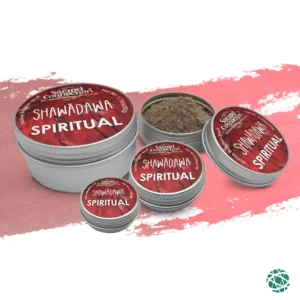
Many people are also drawn to Shawãdawa Rapé, a tradition respected for its rich cultural heritage and its association with introspection, spiritual connection, and inner strength.
While each tradition carries its own unique history and character, they all reflect the rich cultural heritage and ancestral wisdom of the Indigenous peoples who have preserved these practices for generations.
Creating a Grounding Ritual of Your Own
Grounding doesn’t have to be complicated.
A few moments of intentional practice each day can make a meaningful difference. Sitting quietly in the morning, taking a mindful walk, focusing on your breath, journaling your thoughts, or simply spending time away from distractions can help restore a sense of balance.
The most powerful grounding rituals are often the simplest ones, especially when practiced consistently.
Questions fréquemment posées
What are grounding practices?
Grounding practices are activities that help bring attention back to the present moment. Common examples include meditation, breathwork, spending time in nature, journaling, prayer, and mindful movement.
How can I feel more grounded?
Many people feel more grounded by reducing distractions, practicing mindfulness, spending time outdoors, and creating intentional daily rituals that encourage presence and self-awareness.
What is spiritual grounding?
Spiritual grounding refers to practices that help cultivate a deeper sense of connection with yourself, nature, your community, or your spiritual path. Different cultures have developed unique traditions to support this connection.
Final Thoughts
Learning how to feel grounded isn’t about escaping the world. It’s about becoming fully present within it.
Whether through meditation, nature, grounding rituals, traditional spiritual practices, or quiet reflection, these practices can help us reconnect with ourselves and the life unfolding around us.
In a world constantly competing for our attention, choosing presence may be one of the most valuable things we can do.