

What is a Kuripe?
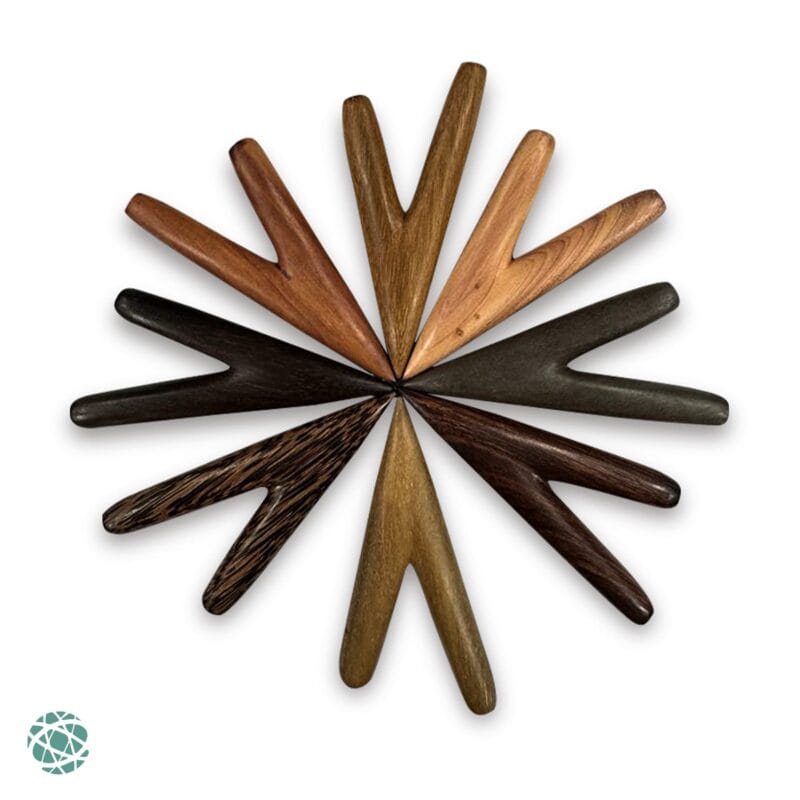
If you’ve come across rapé and want to explore it on your own, the kuripe is the tool you need to know. So, what is a kuripe, exactly?
A kuripe is a small V-shaped ceremonial pipe used for the self-administration of rapé (pronounced ha-peh), a sacred powdered plant medicine with deep roots in Amazonian tradition. One end sits at your nostril, the other at your lips. A single, intentional breath delivers the medicine directly into your nasal passage. Simple in form, significant in purpose, it’s been a cornerstone of solo rapé practice among indigenous Amazonian peoples for centuries.
What is hapé medicine?
Before we discuss how to use a kuripe for administering hapé (or rapé), let’s review what hapé medicine is for those who are new or unfamiliar. Hapé is a powdered plant medicine made from tobacco and other botanicals, prepared according to recipes that have been passed down within Amazonian tribes for generations. Tribes including the Yawanawa and Nukini each have their own distinct blends, with different plants, ashes, and intentions behind each one.
In traditional Amazonian ceremony, rapé is used for self-healing, chakra balancing, and deepening meditation. It’s taken in small amounts through the nose, which clears the sinuses and creates a grounding, focusing effect. It’s not a casual substance or used in a casual manner. There’s specific ceremonial context behind the practice, and thus approaching it with that understanding makes a real difference in how you experience it.
What is a Kuripe used for?
The kuripe is used to self-administer rapé. It’s taken through the nose in small amounts. You load a small measure of rapé into the nostril end of the pipe, place the other end at your lips, and blow. The medicine reaches your nasal cavity directly and quickly. Beyond the physical mechanics, rapé is a ceremonial medicine, and the kuripe is the tool that lets you engage with it privately, on your own schedule, and without a facilitator.
Types of kuripes
Kuripes are handcrafted from several traditional materials, such as bamboo, hardwood, bone, and metal. The materials change how it feels to hold a kuripe, how it performs, and the kind of energy practitioners associate with it.
Bamboo is the most lightweight option and a practical choice for everyday personal practice. It’s easy to carry and you can expect a clean, responsive blow when using it. Hardwood kuripes are denser and sometimes preferred for their visual character, as in, the grain and finish of the well-carved wood pipe. Then there are bone pipes, which carry a different quality. Traditionally, bone pipes are associated with expanded awareness, and they tend to appeal to practitioners further along in their practice. And lastly, metal kuripes are precision-made and consistent in their delivery. They’re a practical choice for beginners who want accuracy from the start, and a reliable everyday tool for experienced practitioners.
Kuripe vs. Tepi
The tepi is the other traditional rapé pipe, and rather than used solely, it requires a second person to administer the medicine to you. The kuripe meaning, at its most practical level, is autonomy. It’s the pipe designed for one. This makes the kuripe the natural choice for personal practice, home ceremonies, or anyone building a relationship with rapé outside of group settings.
How Kuripes are made
Traditional kuripes are handmade by indigenous artisans in the Amazon, and usually carved, painted, or decorated by hand. The craft is passed down through communities, and the detail work (i.e., the finish of the wood, the precision of the V-angle, the decorative elements on the pipe’s surface) reflects that accumulated knowledge.
Because each pipe is made individually, no two are exactly alike. The decorative elements vary by maker and material. For instance, some pipes are left simple and functional, while others feature painted patterns or carved detail.
Before your first use
Approaching rapé with a kuripe for the first time is a practice, not a procedure. Set and setting are foundational. So before you begin, find a quiet space where you won’t be interrupted. Set a clear intention and let that intention guide your breath and your focus throughout the session.
After administering to both nostrils, sit quietly rather than moving on immediately. Give the medicine a few minutes to settle. For new practitioners especially, that stillness is where a lot of the value is, and it’s where the grounding and clarity the medicine is known for actually has room to land.
Start Your Practice
The kuripe is a straightforward tool with a lot of depth behind it, and the best way to understand it is to work with one.
Browse our kuripe collection to find the right pipe, and explore our rapé varieties to pair it with a medicine that suits your intention. If you’re still finding your footing, our blog covers ceremony, different varieties, and practical guidance for beginners.